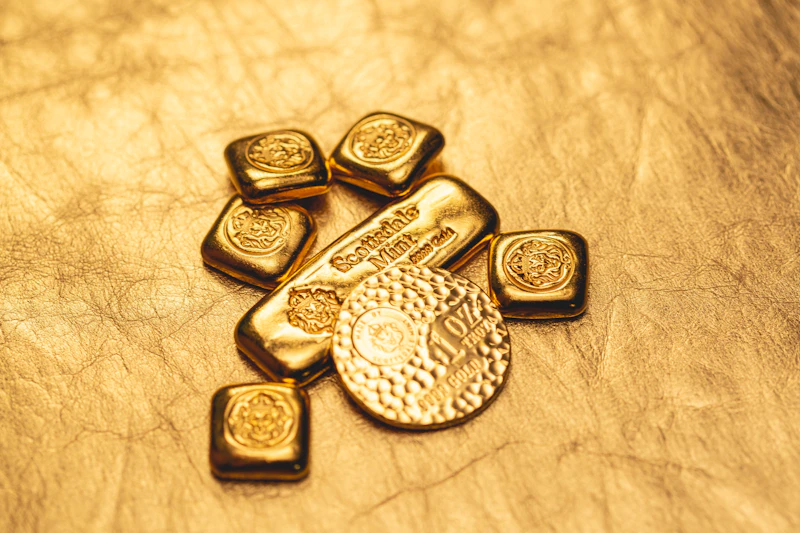
Gold rate today in India is approximately ₹1,35,640 per 10g (24K) as of 24 March 2026, down over 21% from January’s peak. Under the updated Baggage Rules 2026, Indian travelers can bring gold duty-free up to 20g (men) or 40g (women) with no value cap when returning after 1+ year abroad. Dubai, Saudi Arabia, and Bangkok offer lower retail prices due to zero or minimal taxes compared to India’s 3% GST. Short-trip buyers don’t qualify for the duty-free allowance and pay customs duty from the first gram.
Gold Rate Today in India: City-Wise Prices (24 March 2026)
If you’re checking the gold rate today before an international trip, the number that matters isn’t just the spot price — it’s what you actually pay at the counter. Gold has dropped sharply in March 2026, with domestic 24K prices falling over 21% from their January peak of ₹1.9 lakh per 10g to current levels around ₹1.36 lakh.
Here are today’s 24K gold rates across major Indian cities:
| City | 24K Gold Rate (per 10g) |
|---|---|
| Delhi | ₹1,35,790 |
| Mumbai | ₹1,35,640 |
| Chennai | ₹1,39,190 |
| Bangalore | ₹1,35,640 |
| Kolkata | ₹1,35,640 |
| Hyderabad | ₹1,35,640 |
Rates as of 24 March 2026. Chennai prices are higher due to local tax differences. Gold rates change daily — verify live rates from IBJA before purchasing.
How Gold Rates Compare Across Travel Destinations
The international spot price on 24 March 2026 is $4,418 per troy ounce. While the base price is nearly identical worldwide, what you actually pay at a retail counter depends on local taxes and making charges. That’s where destinations like Dubai and Saudi Arabia pull ahead for Indian gold buyers.
| Country | Key Tax/Premium | Why It Matters for Indian Buyers |
|---|---|---|
| India | 3% GST on retail | Baseline — what you’d pay at Zaveri Bazaar or Karol Bagh |
| UAE (Dubai) | Zero VAT on investment gold | 3% cheaper before making charges — biggest savings destination |
| Saudi Arabia | Minimal local taxation | Similar to Dubai, popular with Umrah/Hajj pilgrims |
| Thailand (Bangkok) | No tax, but 23K purity (96.5%) | Lower per-gram cost, but not pure 24K — factor purity into value |
| UK (London) | Investment gold VAT-exempt | Good for bars/coins at Hatton Garden, jewellery carries VAT |
| USA | State sales tax 0-8% varies | New York’s Diamond District competitive for coins, not jewellery |
| Japan (Tokyo) | Consumption tax applies | Premium for craftsmanship, strict sourcing documentation |
| Germany | Investment-grade VAT-exempt | Precision-crafted bars, higher making charges on jewellery |
Retail prices vary by dealer and making charges. Always compare the quoted price against the live international spot rate before buying.
Duty-Free Gold Allowance for Indians Returning from Abroad
Indian customs has specific rules for gold brought into the country. These limits apply to Indian citizens and persons of Indian origin returning from international trips:
| Passenger | Duty-Free Limit | Condition |
|---|---|---|
| Male | 20g jewellery | Must have stayed abroad 1+ year |
| Female | 40g jewellery | Must have stayed abroad 1+ year |
| Beyond limit | Up to 1kg total | Customs duty on excess (concessional rate ~6% for eligible passengers) |
Under the updated Baggage Rules 2026 (effective 2 February 2026), the previous value caps of ₹50,000 and ₹1,00,000 have been removed. The allowance is now purely weight-based.
Three rules every Indian gold buyer abroad must follow:
- Keep itemised invoices — every purchase needs a receipt showing weight, purity (karat), and price paid
- Declare at the red channel — walk through the red channel at Indian airports and declare all gold purchases with documentation
- Carry purity certificates — especially important for Thai gold (23K) and custom jewellery where purity isn’t immediately obvious
Warning: The 1-year rule. The 20g/40g duty-free allowance applies ONLY to Indian citizens who have stayed abroad for more than 1 year. If you’re on a 1-week Dubai trip or a 10-day Thailand holiday, you do NOT qualify for this exemption. Gold purchased on short trips attracts customs duty from the first gram. Check current duty rates with Indian customs before your trip.
Gold worth over ₹20,000 should always be declared with receipts to avoid seizure. Undeclared gold above the duty-free limit can be confiscated by customs.

Dubai: The Gold Shopping Capital for Indian Travelers
Dubai’s Gold Souk in Deira remains the most popular gold-shopping destination for Indian travelers. The reasons are straightforward:
- Zero VAT on investment gold — you pay the spot rate plus a modest making charge
- Massive variety — hundreds of retailers in the Gold Souk, from 22K jewellery to 24K bars
- Bargaining culture — making charges are negotiable, especially for plain gold items
- Indian design availability — many Dubai jewellers stock designs specifically for Indian buyers, including bridal sets, temple jewellery, and mangalsutra designs
Insider tip: Indian travelers flying out of Mumbai and Delhi often combine gold shopping with a short Dubai trip. The savings on making charges alone — typically 8-15% lower than Indian retail — can offset a portion of flight costs for larger purchases like bridal jewellery.
The 3-4 hour direct flight from most Indian metros makes this a practical weekend trip. Indian travelers need a visa for the UAE — check the UAE Visa Guide for requirements and processing times before booking.
For a breakdown of all travel-related costs, use the Visa Fee Calculator to plan your budget.
Saudi Arabia: Competitive Gold Prices with Minimal Tax
Saudi Arabia’s gold markets — particularly in Riyadh, Jeddah, and Mecca — offer gold at competitive rates due to minimal local taxation. Indian pilgrims on Umrah and Hajj trips frequently purchase gold as part of their journey.
- Wedding season demand — bridal gold designs are available at lower making charges than Indian retail
- Trusted souks — established gold souks in Riyadh’s Bathaa area and Jeddah’s Balad offer certified gold
- No VAT on investment gold — similar to Dubai, investment-grade gold carries no additional tax
Indian travelers need a visa for Saudi Arabia — check the Saudi Arabia Visa Guide for requirements before booking. If you’re traveling on an Umrah visa, note the latest Saudi Umrah departure rules and deadlines before planning your gold purchases.
Important: Purchase only from established jewellers who provide proper documentation. Sourcing certificates help clear Indian customs smoothly and comply with anti-money laundering regulations.
Bangkok’s Yaowarat: 23K Gold at Transparent Prices
Bangkok’s Yaowarat Road (Chinatown) is renowned for gold, but with one important distinction — Thai gold is 23K (96.5% purity), not 24K. This means:
- Lower per-gram cost than 24K gold, but you’re getting slightly less pure gold
- Daily price updates by the Gold Traders Association of Thailand keep the market transparent
- Lower making charges than Indian retail, especially for chains and bangles
What Indian buyers should know: Thai 23K gold has a distinctive warm yellow colour that’s different from 24K. If you’re buying for investment (melting value), the 96.5% purity needs to be factored into your per-gram calculation. For jewellery you plan to wear, the durability of 23K actually makes it more practical than softer 24K gold.
Always get a purity certificate. Indian customs officers may question Thai gold purity without documentation, and you don’t want your purchase classified as a commercial import.
Indian travelers need a visa for Thailand — check the Thailand Visa Guide for current entry requirements.
UK, USA, and Europe: When Gold Shopping Makes Sense
Gold in London, New York, Frankfurt, and Tokyo trades close to the international spot price, but local taxes and higher making charges mean these aren’t typically “gold shopping” destinations for Indian travelers. However, there are scenarios where it makes sense:
United Kingdom — Investment gold (bars and coins) is VAT-exempt in the UK. London’s Hatton Garden jewellery district offers certified bullion at competitive prices. Jewellery carries standard VAT. Check the UK Visa Guide for entry requirements.
United States — Gold coins and bars attract state-level sales tax that varies from 0% to 8%+ depending on the state. New York’s Diamond District offers competitive premiums (1-5% over spot) but is better for coins and bars than jewellery. See the US Visa Guide for application details.
Germany — Investment-grade gold is VAT-exempt. Frankfurt’s bullion dealers like Degussa are known for precision-crafted bars. European design jewellery carries higher making charges. Indian travelers need a Schengen visa — check the Germany Visa Guide for requirements.
Japan — Tokyo’s Ginza district offers minimalist gold jewellery, with gold futures traded on the Osaka Exchange. Japanese craftsmanship adds a premium, but strict sourcing standards mean your purchase documentation will clear Indian customs without issues. Check the Japan Visa Guide before booking.
For any of these destinations, factor in the exchange rate at the time of purchase. A strong rupee makes foreign gold cheaper; a weak rupee erodes the tax savings.
The Real Math: Is Buying Gold Abroad Worth It?
The spot price of gold is nearly identical worldwide. The savings come from three factors:
- Tax differential — India’s 3% GST vs 0% in Dubai/Saudi Arabia. On a ₹4 lakh purchase, that’s approximately ₹12,000 saved.
- Making charges — Indian retail making charges range from 8-25% depending on design complexity. Dubai and Bangkok making charges run 5-15% for comparable designs.
- Customs duty on return — if you exceed the duty-free limit (20g men / 40g women), the customs duty on excess gold reduces or eliminates your savings.
The breakeven calculation: For purchases within the duty-free limit (20g for men, 40g for women), buying in Dubai or Saudi Arabia saves roughly 3-8% compared to Indian retail. For purchases above the duty-free limit, the customs duty often wipes out the tax savings — making it worthwhile only if the making charge difference is significant.
| Scenario | India Cost | Dubai Cost | Savings |
|---|---|---|---|
| 10g 24K bar (within limit) | Spot + 3% GST + making | Spot + making only | ~3-5% |
| Bridal set 30g (within female limit) | Higher making charges | Lower making + no GST | ~5-10% |
| 50g purchase (exceeds limit) | GST + making | Lower making, but duty on 10-30g excess | Varies |
Mistakes Indian Travelers Make When Buying Gold Abroad
Indian travelers buying gold on international trips commonly make these errors:
- No invoices — buying from street vendors or small shops without proper receipts. Indian customs requires itemised invoices for declaration
- Ignoring the 1-year rule — duty-free allowances apply only if you’ve been abroad for 1+ year. Short trips don’t qualify for the 20g/40g exemption
- Mixing investment and jewellery — bars and coins have different duty treatment than jewellery in some cases. Keep purchases and receipts separate
- Forgetting to declare — walking through the green channel with undeclared gold above the limit risks seizure and penalties
- Buying from sanctioned sources — avoid gold from Iran, Russia, or other sanctioned origins. Indian customs and anti-money laundering regulations apply
How to Check Live Gold Rates Before You Buy
Gold prices change multiple times per day. Before making a purchase abroad, check rates through these sources (verify prices, don’t rely on memory):
- IBJA (India Bullion and Jewellers Association) — the reference rate for Indian domestic gold pricing
- Kitco — real-time international spot prices
- Gold Traders Association of Thailand — daily Thai gold rates
- Dubai Gold and Jewellery Group — UAE retail pricing benchmarks
Compare the local retail price you’re being quoted against the live spot rate. A premium of 1-5% over spot is normal for bars and coins. Making charges for jewellery are separate and negotiable.
Use the Visa Readiness Score to ensure your travel documentation is in order before planning a gold-shopping trip abroad.
Plan Your Gold Shopping Trip
Whether you’re heading to Dubai for bridal jewellery, picking up gold in Bangkok’s Yaowarat, or shopping in Saudi Arabia during Umrah — get your visa sorted first. Check the UAE Visa Guide or Thailand Visa Guide for requirements, documents, and current processing times.
Frequently Asked Questions
Q: How much gold can I bring to India from abroad without duty? A: Male passengers returning after 1+ year abroad can bring 20g of gold jewellery duty-free. Female passengers can bring up to 40g. Under the updated Baggage Rules 2026, there is no value cap — the allowance is purely weight-based. Beyond these limits, up to 1kg is allowed with customs duty.
Q: Is gold cheaper in Dubai than India? A: Gold in Dubai typically costs less than in India because the UAE charges no GST or VAT on investment gold. India adds 3% GST to retail gold purchases, making Dubai prices lower by that margin before factoring in making charges.
Q: What customs duty applies on gold brought to India? A: Gold beyond the duty-free allowance attracts customs duty. Indian citizens and persons of Indian origin can bring up to 1kg of gold by paying the applicable duty rate. Always declare gold at the red channel with purchase invoices and purity certificates.
Q: Is Bangkok gold real 24 karat? A: Bangkok’s Yaowarat gold market primarily sells 23K gold (96.5% purity), not 24K. This is standard Thai gold purity. The Gold Traders Association of Thailand updates prices daily. Carry purity certificates for Indian customs.
Q: Which country has the cheapest gold for Indian buyers? A: Dubai and Saudi Arabia offer among the lowest retail gold prices globally due to minimal local taxation. However, the final cost for Indian buyers depends on customs duty, making charges, and the INR exchange rate at the time of purchase.
Q: Do I need to declare gold at Indian customs? A: Yes, you must declare gold purchases at the red channel with itemised invoices and purity certificates. Undeclared gold above the duty-free limit can be seized. Gold worth over ₹20,000 should always be declared with receipts.


